
Night Sweats: What your body may be trying to tell you
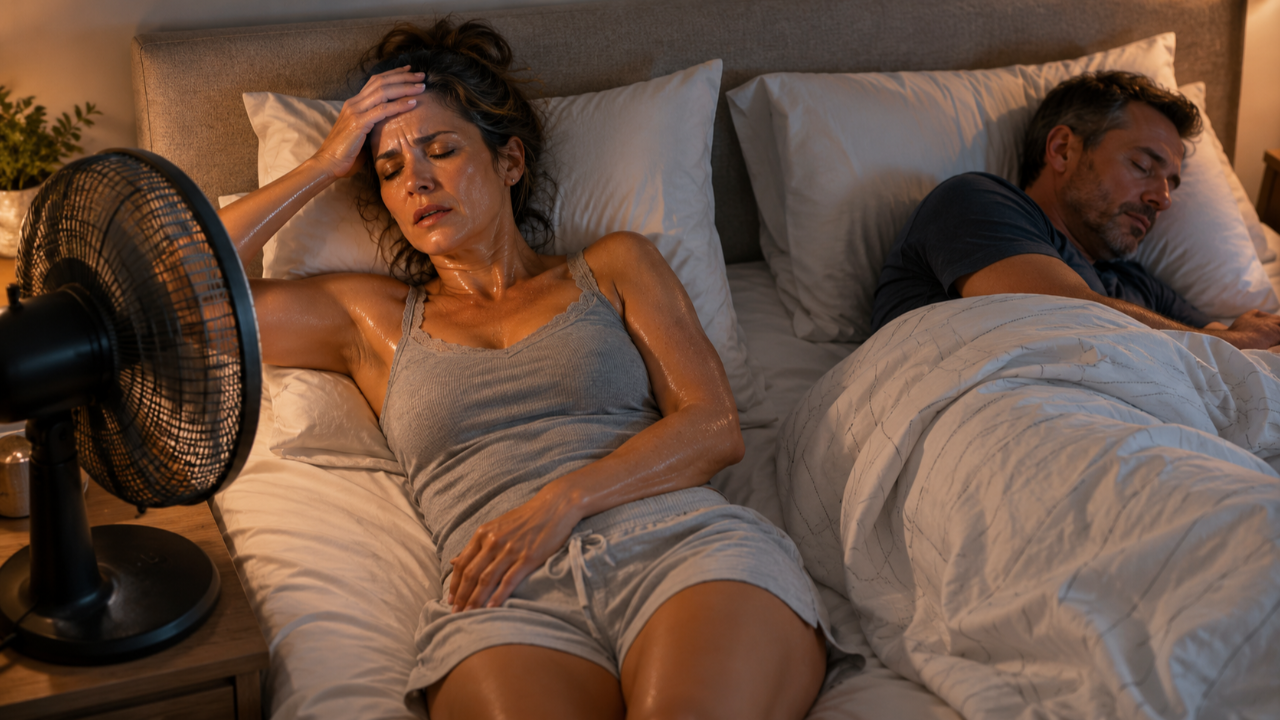
If you've been waking up drenched in sweat, changing clothes in the middle of the night, or throwing the covers off while everyone else in the room is comfortable, you're not alone.
And here's the part most people never get told:
Night sweats are often treated like a symptom to ignore, cover up, or blame on "getting older" or "hormones."
But many times, your body is trying to tell you that something deeper is going on.
Not because you're broken.
Not because you're overreacting.
Not because this is "just part of aging."
Night sweats are information.
And while they can sometimes be harmless, persistent night sweats in women and men can be one of the body's early warning signs that something is off beneath the surface.
What Are Night Sweats?
Night sweats are episodes of excessive sweating during sleep that are significant enough to soak pajamas, sheets, or bedding.
This is different from simply being too warm because the thermostat is too high or using heavy blankets.
True night sweats often happen repeatedly and can occur even when the room is cool.
For some people, they happen occasionally.
For others, they become a nightly event that disrupts sleep, energy levels, and quality of life.
Why Night Sweats Happen
Your body works hard to maintain balance while you sleep.
Hormones shift.
Blood sugar changes.
Your immune system becomes more active.
Repair and detoxification processes ramp up.
When something interferes with those systems, the body may respond by increasing body temperature and triggering sweating.
The question isn't simply:
"How do we stop the sweating?"
The better question is:
"Why is the body producing the symptom in the first place?
Common Causes of Night Sweats in Women and Men
1) Hormonal Changes and Hormone Imbalances
This is one of the most common causes of night sweats, especially in women.
Declining estrogen and progesterone levels during perimenopause and menopause can disrupt temperature regulation and trigger hot flashes during sleep.
But hormones aren't just a women's issue.
Low testosterone, cortisol imbalances, and thyroid dysfunction can also contribute to night sweats in men and women.
2) Blood Sugar Imbalances
Many people don't realize that blood sugar crashes can happen while you're sleeping.
When blood sugar drops too low overnight, the body releases stress hormones like cortisol and adrenaline to raise it back up.
That stress response can lead to:
-
Sweating
-
Racing heart
-
Anxiety
-
Waking up around 2–4 a.m.
-
Difficulty falling back asleep
For some people, night sweats are less about hormones and more about unstable blood sugar regulation.
3) Infections and Immune Activation
The immune system often raises body temperature when it's fighting something off.
This can happen with acute infections, but it can also occur with chronic low-grade immune activation that may not show up clearly on routine testing.
If night sweats started around the same time as fatigue, swollen glands, recurring illness, or feeling "run down," it's worth looking deeper.
4) Medications
Sometimes the very thing you were given for one issue can create symptoms somewhere else.
Several medications list night sweats as a possible side effect, including:
-
Antidepressants
-
Certain blood pressure medications
-
Steroids
-
Hormone medications
-
Fever-reducing medications
If your symptoms started after beginning a medication, it's worth discussing with your healthcare provider.
5) Thyroid Imbalances
Your thyroid acts like your body's thermostat.
When thyroid hormones are too high, the body may produce excess heat, resulting in:
-
Increased sweating
-
Heat intolerance
-
Racing heart
-
Anxiety symptoms
-
Sleep disturbances
Even subtle thyroid dysfunction can sometimes contribute to temperature regulation issues.
6) Toxicity Load and Environmental Stressors
This is an area that often gets overlooked.
The body uses sweating as one pathway for elimination.
When the body's total stress load becomes too high, whether from environmental toxins, mold exposure, heavy metals, or other stressors, symptoms can show up in unexpected ways.
Night sweats don't automatically mean toxicity is the cause, but it's one of the many pieces worth considering when the usual answers don't explain what's happening.
Why "Everything Looks Normal" Doesn't Always Mean Everything Is Fine
One of the most frustrating experiences is going to doctor after doctor, having lab work done, and being told:
"Everything looks normal."
Standard testing is incredibly valuable.
But it doesn't measure everything.
Many functional imbalances happen long before they become obvious enough to appear on routine labs.
That doesn't mean symptoms aren't real.
It simply means the thing driving the symptom may not be the thing being measured.
When Night Sweats Shouldn't Be Ignored
Occasional night sweats happen.
But if they are:
-
Happening several times per week
-
Soaking clothing or sheets
-
Getting progressively worse
-
Affecting sleep quality
-
Accompanied by unexplained weight loss, fever, or fatigue
It's important to get evaluated and rule out more serious medical causes.
Symptoms deserve investigation, not dismissal.
A Different Way to Look at It: The Symptom Is Information
In our practice, we try not to view symptoms as random inconveniences that need to be silenced.
We view them as clues.
The body is incredibly intelligent.
If it's waking you up in the middle of the night covered in sweat, it's usually doing it for a reason.
The goal isn't simply to suppress the signal.
The goal is to understand why the signal is there.
Because when the underlying imbalance is identified and addressed, the symptom often no longer needs to exist.
What To Do If You're Experiencing Night Sweats
If you've been dealing with night sweats and you've been told they're "normal" or "just hormones," it may be worth taking a deeper look.
Consider the bigger picture:
-
Hormones
-
Blood sugar balance
-
Thyroid health
-
Immune function
-
Medication side effects
-
Toxicity load
-
Sleep environment and lifestyle factors
Because you deserve more than:
"Your labs are normal."
And you deserve more than:
"This is just part of getting older."
Sometimes, night sweats aren't the problem.
They're the clue pointing toward the problem.
And finding that reason can change everything.
If you are local to the Phoenix, AZ area, go to this link to find out more about holistic solutions to help reset and remove interference from your body so it can do its job properly. Pills just cover up symptoms—they don’t fix WHY this is happening. Isn’t it time to finally resolve it instead of managing it?
If you are not local to the Phoenix, AZ area, then click here to check out all of your options! You’ll get the exact steps you need to take, plus support from me to guide you every step of the way!
xo Monica 🦋 Treat the Source: where we reveal all of the hidden causes of your mystery symptoms!
Educational content only. This is not medical advice and isn’t meant to diagnose, treat, or cure any condition.
