
Why your bedroom could be interfering with your sleep
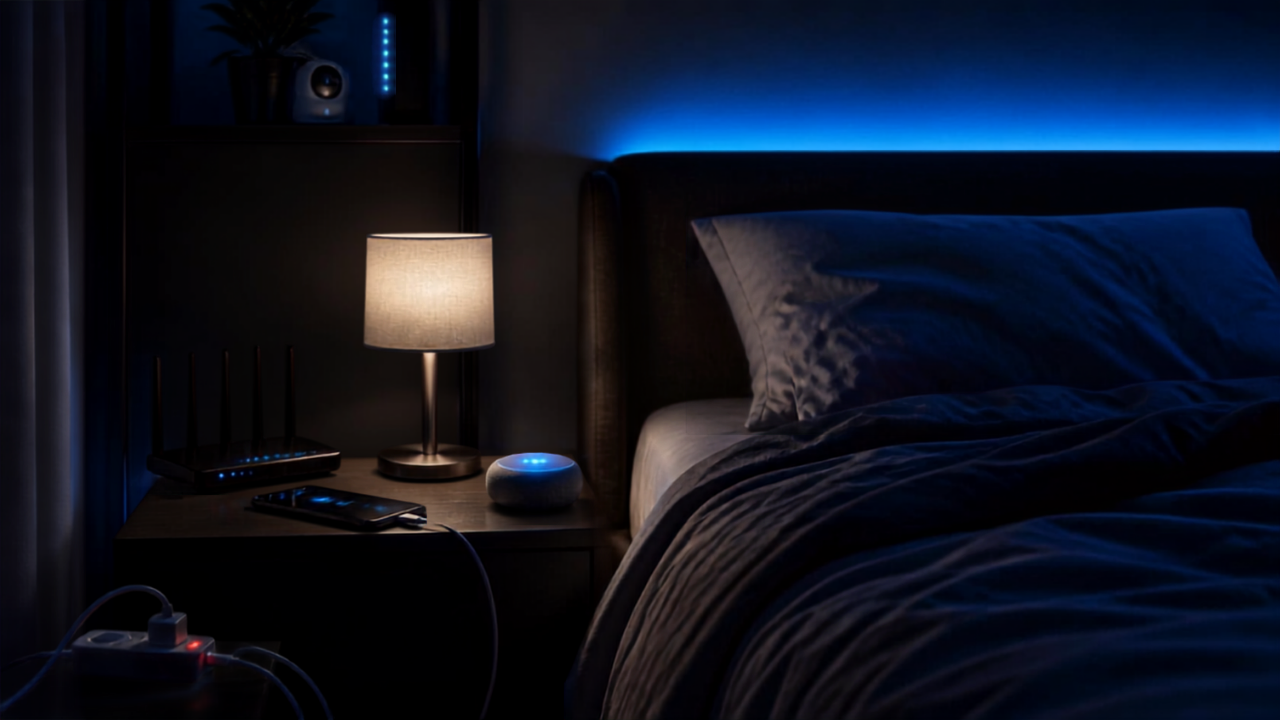
You may be doing everything you can to sleep better—and still be sleeping in an environment that is working against you.
If you struggle with insomnia, wake up throughout the night, feel exhausted even after spending eight hours in bed, or simply cannot seem to settle down at night, I want you to look at something most people overlook:
Your bedroom.
We tend to think of sleep problems as something happening inside the body. Maybe it is stress. Maybe it is hormones. Maybe you need another supplement.
But what if part of the problem is what your body is exposed to for the 6–9 hours you are trying to repair and restore?
Your bedroom should be the place where your body gets a break from the outside world. If it is filled with hidden sources of interference, your body may have a harder time doing what it was designed to do.
Your Body Is Trying to Repair While You Sleep
Sleep is not just about closing your eyes.
While you sleep, your body is working on repair, regulation, immune function, and restoring balance. That is why the environment surrounding you matters.
This is where I look at sleep differently.
I don't want to simply ask, “What can we take to help you sleep?”
I want to ask:
“What could be interfering with your body’s ability to sleep in the first place?”
That question takes us beyond the symptom and into the source.
At Treat the Source, we look at symptoms through the 5 Layers to Illness. The first layer is toxic burden. Over time, everyday exposures can add to the amount your body has to process. That can contribute to inflammation and put more stress on the system.
Your bedroom is one place where those exposures can happen every single night.
And that is important because you spend a huge amount of time there.
Your Mattress May Be One Hidden Source
Think about your mattress.
You may spend thousands of hours sleeping directly on it, breathing next to it, and having your skin in contact with it.
Mattresses can contain flame-retardant chemicals and other materials that contribute to the chemical load in your sleeping environment. Memory foam is another area I would pay close attention to because of the materials used in many of these products.
I'm not saying that everyone with insomnia needs to replace their mattress tomorrow.
I'm saying look at the environment your body is exposed to every night.
If your toxic burden is already high, adding more hidden sources may be one more piece of interference your body has to deal with.
When we are looking at chronic symptoms, I don't want to isolate one thing and pretend it explains everything. It is usually the combination of layers that keeps people stuck.
Toxic burden.
Digestion.
Immune stress.
Hidden sources.
Nervous system interference.
And sometimes blocking or switching that prevents the body from responding properly.
That is why the goal is not to chase insomnia forever.
The goal is to remove interference so the body can respond.
Your Bedroom Electronics Matter Too
Now let's talk about something almost every bedroom has:
Electronics.
Phones.
Wi-Fi routers.
Smart TVs.
Chargers.
Smartwatches.
Bluetooth devices.
LED lights.
These are easy to ignore because you cannot see the electrical interference around them.
But your nervous system is constantly communicating through electrical signals, and I pay close attention to the electrical environment people are exposed to when they are already dealing with sleep problems or other mystery symptoms.
Artificial electromagnetic exposure and what I call dirty electricity are areas I recommend reducing, especially in the bedroom. The Treat the Source approach specifically recommends keeping electronics out of the bedroom when possible, turning off Wi-Fi at night, unplugging devices that are not being used, and reducing unnecessary electrical exposure around your sleep space.
This is especially worth looking at when someone tells me: “I'm exhausted, but I can't shut my brain off.”
Or: “I fall asleep, but I keep waking up.”
Or: “Nothing I try seems to work for my sleep.”
That better-worse-better-worse pattern is something I never want to ignore.
Because sometimes the problem is not that you haven't found the right sleep remedy.
Sometimes something is interfering with your body's ability to respond.
What About Your Bedroom Lighting?
Your bedroom lighting can also affect how your body winds down at night.
LED bulbs produce blue light, and the lighting environment can affect the brain, eyes, and the body's ability to transition toward sleep. The Treat the Source recommendations include reducing harsh lighting at night and using different lighting options where possible.
This is a simple place to start.
Instead of having bright overhead lights on late at night, create a darker, calmer environment.
And don't forget the light coming from electronics.
That glowing phone beside your bed may seem harmless, but your bedroom should be a place where your nervous system gets a chance to settle—not another place where it is constantly being stimulated.
This Is Bigger Than Sleep
This is the part I really want you to understand.
If you are struggling with sleep, it is easy to focus only on sleep.
You buy something for sleep.
You take something for sleep.
You try a new routine.
You change your bedtime.
And when it doesn't work, you try something else.
But if your body is dealing with a high toxic burden, digestive interference, immune overwhelm, hidden sources, or nervous system interference, you can keep chasing the sleep symptom without addressing what is underneath it.
That is how people stay stuck.
The 5 Layers to Illness show us that symptoms can develop through layers of dysfunction before something necessarily shows up as an obvious abnormality on standard labs.
So when someone says, “My labs are normal, but I can't sleep,” I don't automatically assume there is nothing to look at.
Sleep problems are one of the symptoms specifically identified in the Treat the Source framework.
The question becomes:
What is keeping your body from responding properly?
Start With Your Bedroom
You don't have to replace everything in your bedroom tonight.
Start with the easiest changes.
Remove your phone from your bedside table and charge it somewhere else.
Turn off Wi-Fi at night if you are able to.
Unplug electronics that don't need to stay plugged in.
Reduce bright LED lighting in the evening.
Look at your mattress and bedding materials.
Avoid unnecessary fragrances and chemical products in the room.
Keep the bedroom dark and quiet.
And pay attention to how you feel.
You are looking for patterns.
Do you sleep differently in a hotel?
Do you sleep better when you travel?
Do you wake up less when your phone is outside the room?
Do you notice a difference when the room is completely dark?
These observations can give you useful clues about hidden sources of interference.
But Don't Stop at the Bedroom
Your bedroom may be one piece of the puzzle.
It is not necessarily the answer.
That distinction matters.
If you have been dealing with chronic insomnia, fatigue, brain fog, digestive problems, hormone-related symptoms, allergies, or other symptoms that keep coming back, I want to look at the whole picture.
What is contributing to your toxic burden?
How is digestion functioning?
Are there hidden sources in your daily environment?
Is your nervous system responding properly?
Is there blocking or switching?
What layers are keeping your body overwhelmed?
And most importantly:
What needs to be removed so your body can respond?
This is why I don't believe in handing everyone the same sleep supplement and sending them on their way.
No two bodies have the same history.
No two people have the same combination of interference.
And if something is blocking the body's ability to respond, adding more may not be the answer.
Your Takeaway
Before you decide that your body simply “can't sleep,” take a closer look at where you sleep.
Your mattress, lighting, electronics, Wi-Fi, and other environmental exposures can all become part of the bigger picture when we are looking at hidden sources of interference.
But remember, sleep is only one symptom.
The bigger question is why your body is struggling to regulate and respond in the first place.
At Treat the Source, we look at the layers underneath the symptom—including toxic burden, digestion, immune overwhelm, hidden sources, nervous system interference, and blocking or switching.
Because the goal isn't to spend the rest of your life managing sleep.
The goal is to remove the interference so your body can do what it was built to do.
If you are local to the Phoenix, AZ area, go to this link to find out more about holistic solutions to help reset and remove interference from your body so it can do its job properly. Pills just cover up symptoms—they don’t fix WHY this is happening. Isn’t it time to finally resolve it instead of managing it?
If you are not local to the Phoenix, AZ area, then click here to check out all of your options! You’ll get the exact steps you need to take, plus support from me to guide you every step of the way!
xo Monica 🦋 Treat the Source: where we reveal all of the hidden causes of your mystery symptoms!
Educational content only. This is not medical advice and isn’t meant to diagnose, treat, or cure any condition.
